The story behind 2AM
By Harper Spero, CEO of 2AM
There's a version of friendship nobody prepares you for. It's not the 12pm brunch friend or the 6pm happy hour friend. It's the 2AM friend, the one you call when everything is falling apart and the rest of the world is asleep.
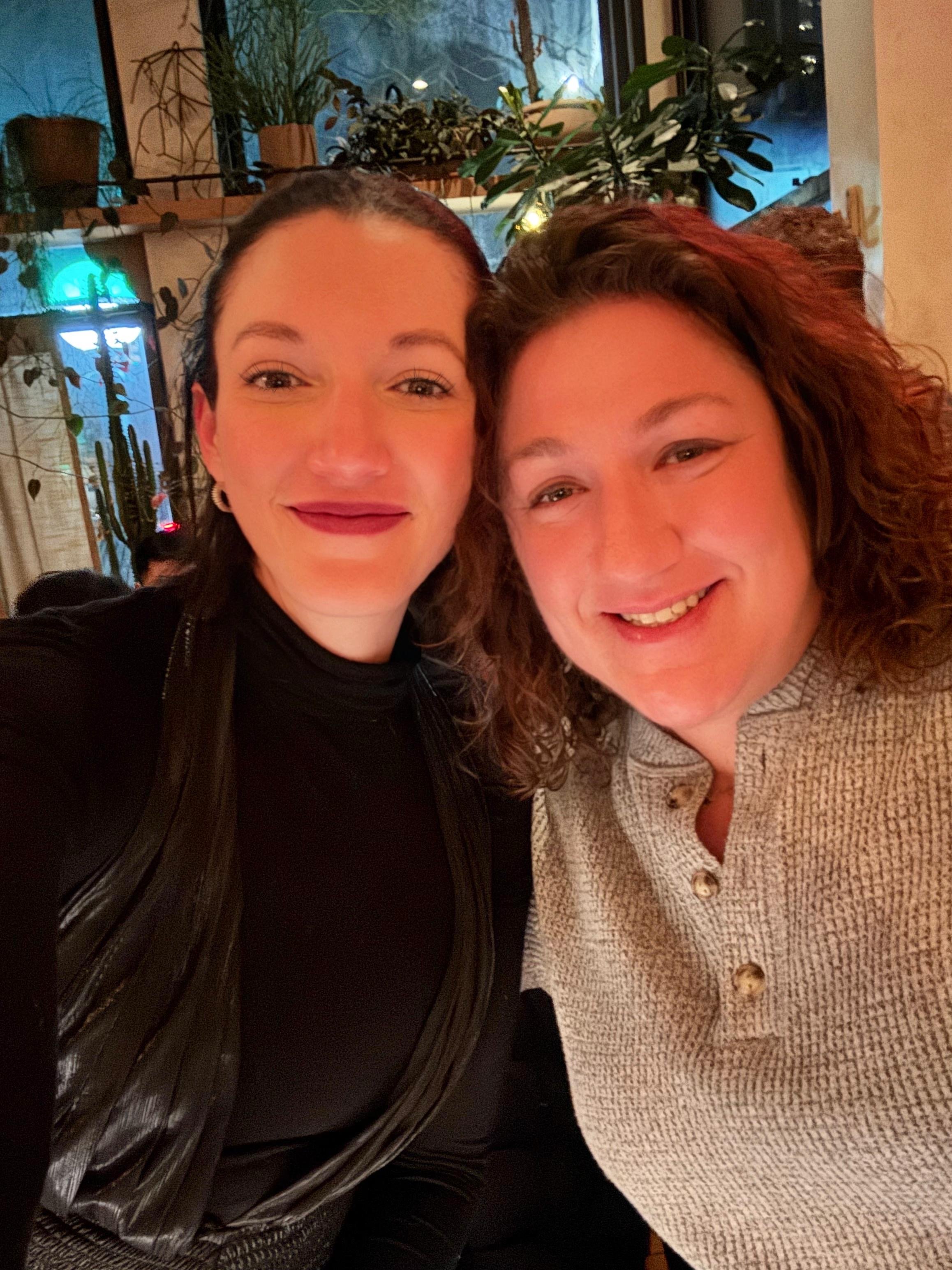
I'm lucky to have a handful of friends like that. One of them is Tiffany.
Our friendship wasn't built on the easy stuff. It was built on late-night check-ins with chronic illness, cancer, grief that didn't come with instructions, on impossible conversations about family planning and the quiet devastation of rejection. Somewhere in all of it, we learned something I never expected to become a company: being a good friend was never about saying the perfect thing. It was about showing up anyway, even when you have no idea what to say.
Sometimes I still get it wrong. When Tiffany's dog died, I froze. I'm not a dog person, I never have been, and I genuinely didn't know how to show up for a kind of grief I didn't share. So I reached out to a mutual friend who has a dog and asked what I could send her, what I could do. She told me, kindly but clearly, that this one wasn't mine to carry. Tiffany had other friends, dog people, who understood this particular loss in a way I couldn't. She said Tiffany knew I was there and would lean on me when it was something I could actually help with. That stuck with me. I wanted to be the one who helped. Instead I learned that showing up sometimes means asking for help yourself, and being okay with not being the answer.
I've known the flip side of that feeling my whole life. I was born with a rare immunodeficiency that comes with symptoms and side effects nobody can predict, including me. I know what it's like to carry something people can't see, to explain it over and over, to watch people who love me want to help and freeze because they don't know how. So when I say I understand the uncertainty, the shifting boundaries, the ache of wanting to be truly seen, that's not empathy I studied. It's just my life.
I found How to Be a Friend to a Friend Who's Sick by Letty Cottin Pogrebin years ago, a guide she wrote after her own experience with cancer and dozens of interviews with others navigating the same thing. In 2019, I had her as a guest on my podcast, Made Visible, to talk about what led her to write it. That conversation planted something that never really left me.
It's only gotten louder with time. As you get older, the phone calls change. Friends start navigating fertility struggles, illness, aging parents, the kind of hard things that don't come with a manual or script. I found myself reaching for the same questions over and over: what do I say, what do I do, how do I actually help instead of just meaning well. That question became 2AM.
Tiffany and I have been having some version of this conversation for years, long before there was a name for it. She's not day to day in the business, but she's been in the room for almost every idea, which is why she's an advisor to 2AM today. This whole thing started as two friends trying to figure out how to be there for each other, and for everyone else we love.
I didn't come to this as an outsider theorizing about hard moments. I've been a certified coach and facilitator since 2014, helping people through some of the hardest transitions of their lives. I've shared my story at companies like Diageo, Sony, and UBS, helping teams understand what it really looks like to support someone whose struggle isn't visible. That work became Made Visible, the community I built for people navigating invisible illness. Add in a career spent in marketing, storytelling, and community-building across wellness, nonprofit, and e-commerce, and you get exactly what it takes to turn "I wish someone had told me what to say" into something people can actually use.
2AM exists for the person staring at their phone at 11pm, cursor blinking, afraid to hit send because they don't know if what they wrote is right. It's for the friend who wants to help but doesn't know if flowers are the right move, whether to bring up the diagnosis or wait for it to come up, what to say instead of "I'm so sorry."
You tell us what the person you care about is going through. We give you the words, the do's and don'ts, and the resources, so you can stop freezing and start showing up.
Because here's what I've learned, more than once, the hard way: it's better to screw up than not show up.
ABOUT HARPER
I love storytelling, community building, and supporting voices that are often not heard. My work sits at the intersection of advocacy, coaching, and consulting, helping individuals and organizations tell honest, compelling stories that build trust, connection, and impact.
Before 2AM, I founded Made Visible, a platform created to amplify the voices of people living with invisible illness. From its launch in 2018 through its run, I helped people feel less alone, and helped those who weren't living with invisible illness better understand these experiences and show up with greater compassion. It was featured in TheSkimm, Health Magazine, Self Magazine, Well+Good, People Magazine and more.
Since 2014, I've coached solopreneurs and small business owners as they launch and grow their ventures, helping them navigate all the challenges of building a business. From 2020 to 2023, I facilitated a group coaching program for women solopreneurs.
Earlier in my career, I spent a decade in marketing, event production, and PR, working with brands such as Buddy Media (acquired by Salesforce), Avon, and Bobbi Brown Cosmetics (acquired by Estée Lauder).
I grew up in Manhattan, where my commitment to service took root after 9/11, when I founded my high school's Community Service Club. After returning to New York from Tel Aviv following October 7th, I focused on grassroots fundraising and advocacy, raising over $80,000 through my personal network and social media to support displaced Israeli families and soldiers.
During the COVID-19 pandemic, I facilitated writing classes for people living with invisible illness and spoke at companies including UBS, SONY Music, Mellon Investments, and Diageo. I was also the keynote speaker at the Advocate Health For All Conference in 2025.
Outside of work, I love writing, trying to be a more committed reader, cooking vegetarian concoctions, chasing sunsets on the beach, and traveling to see live music in different cities.